
SuiteSpot 3.5
Continuing their push into corporate networks, Netscape Communications recently released SuiteSpot 3.5, a compilation of Netscape's Web, mail, groupware, and directory-server offerings. The key feature in SuiteSpot 3.5 is an increased focus on directory integration, with the various servers using Netscape's Directory Server as a common authentication and access-control repository.
This focus on a shared, consistent directory pays handsome rewards to administrators in large-scale environments, who can now share user and group information across a multitude of servers. Using Netscape's Directory Server on a Windows NT Server 4.0 host, I was able to use a single repository of user accounts with Web and mail servers on multiple hosts—without having to distribute or synchronize the accounts.
However, SuiteSpot still falls down in a couple of key areas. There is no unified installation; instead, you must install each component in a specific order. Further, the access-control list management tools are still too difficult for an average end-user to grasp.
Overall, however, the product provides a strong and flexible platform for intranet services, offering cross-platform, component-based services that can be split up across different operating systems and hardware according to your needs.
Centralized directory
The cornerstone of SuiteSpot 3.5 is Netscape's Directory Server 3.0. Directory Server 3.0 is the first major implementation of a directory service to use Lightweight Directory Access Protocol 3 [LDAP], so it includes features such as international language support and real-time replication among multiple directory servers.
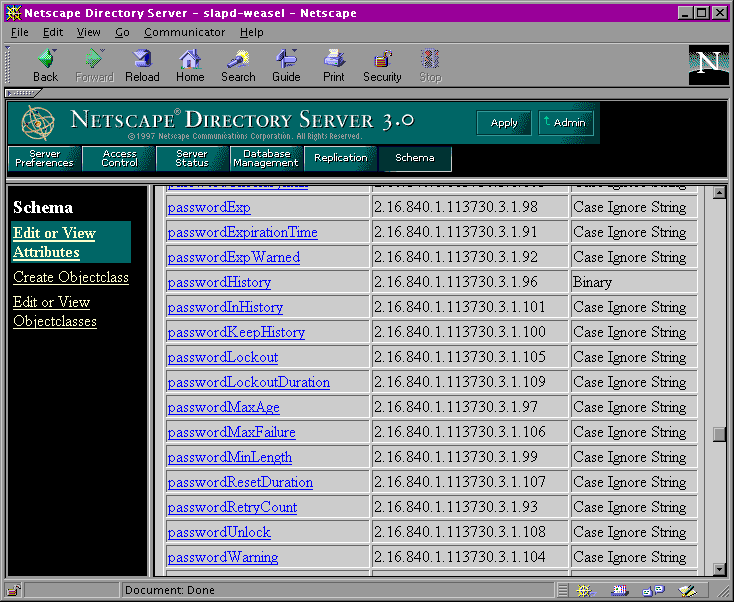
Another new feature that administrators will appreciate is support for online directory backups, allowing you to create copies of the directory without having to bring the server down. Further, Netscape's administration tools for their LDAP server now allow you to define LDAP attributes and schemas on-the-fly, no longer requiring you to import files and data by hand.
Although Netscape's server products are normally configured to use Netscape's own Directory Server offering, I was also able to use University of Michigan's SLAPD LDAP server on a system running Caldera's OpenLinux Standard 1.1 with little loss of functionality.
Enhanced groupware services
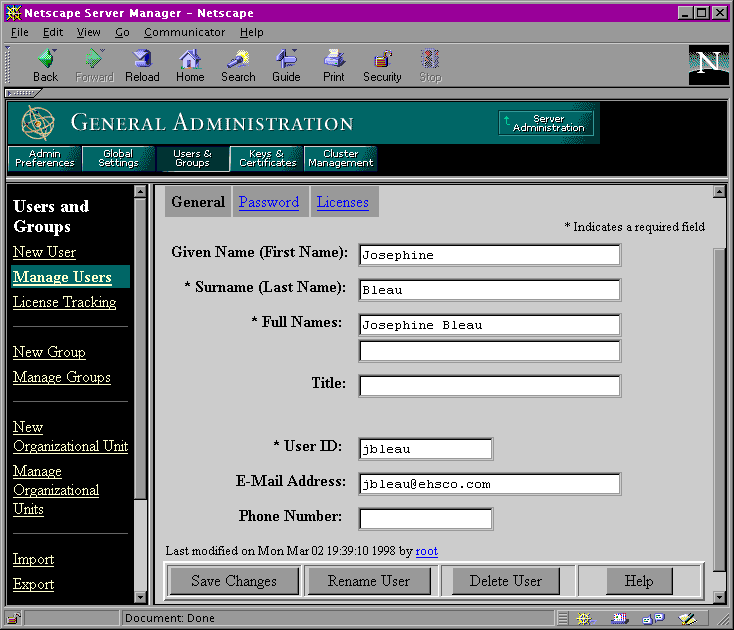
Also new to SuiteSpot 3.5 are updated versions of Netscape's Messaging Server, Collabra Server, and Calendar Server. The primary benefit of these new versions is improved integration with Netscape's Directory Server. Each user object created in the directory can be assigned a "license" to use these other servers, and other user information (such as name, message store, permissions, etc.) is also kept in the directory.
Messaging Server offers support for SMTP, POP3, and IMAP 4.1 e-mail services, as well as enhancements that come from the directory integration, such as allowing users to locate each other by querying Netscape's Directory Server. These features worked well in my tests with Netscape's Communicator mail client, as well as with Microsoft's Outlook Express mail client.
New to Messaging Server 3.5 is support for server-based spam filters, allowing administrators to automatically kill messages that appear to be unsolicited junk mail.
During installation, a new mail management account was created that was used to run the mail services on the NT host. Because all files (and not just the services) were owned by this account, I was unable to explore and maintain the mail database files using the NT system account. Changing ownership of the service and directories to the NT system account was possible, although I experienced some management problems after making these changes.
I was also unable to find a way to disable the SMTP VRFY and EXPN commands from within the console. These commands allow anyone with a Telnet client to see members of groups and mailing lists. Although it is possible to disable those commands by editing a control file, they should be disabled by default. This is a fundamental security issue that needs to be better addressed.
Two other new additions to SuiteSpot are Messenger Express and Calendar Express. These server-based components provide access to users' mailboxes and calendars through a Web browser.
Improved Web services
Netscape's champion product, Enterprise Server, has also been updated, with Version 3.5.1 now included in the SuiteSpot offering.
A big addition to Enterprise Server is the integrated Netshare content-publishing facility. Netshare provides a virtual workspace for viewing, modifying, and publishing Web content from within a Web browser. Among the features offered by Netshare are version control, user-driven access control tools (linked to Netscape's Directory Server, of course), and the capability to check for broken links.
Solid intranet solution
All told, I found that Netscape's latest versions of their Web, mail, and directory services were more stable, robust, and usable than ever. As individual components they make a fine choice for companies looking to add Internet services for external or internal use. However, by having the entire product line available on a single, consistent release, I was able to get the main services up and running quickly.
SuiteSpot comes in two flavors: Standard and Pro. SuiteSpot Standard includes Netscape's Directory, Enterprise, Messaging, Calendar, and Collabra servers and Communicator Pro for $82 per user.
SuiteSpot Pro adds Netscape's Certificate, Proxy, and Compass servers, as well as Mission Control Desktop, a client configuration and management tool. SuiteSpot Pro costs $140 per user.
Netscape's SuiteSpot products are a bundled set of Internet servers. Although you can buy each server separately, getting the whole shebang in SuiteSpot gives you consistent versions and implementations, making the integration work less of a headache.

Copyright © 2010-2017 Eric A. Hall.
Portions copyright © 1998 InfoWorld Media Group, Inc. Used with permission.